Underground Chilled Water Pipe Joint Failure
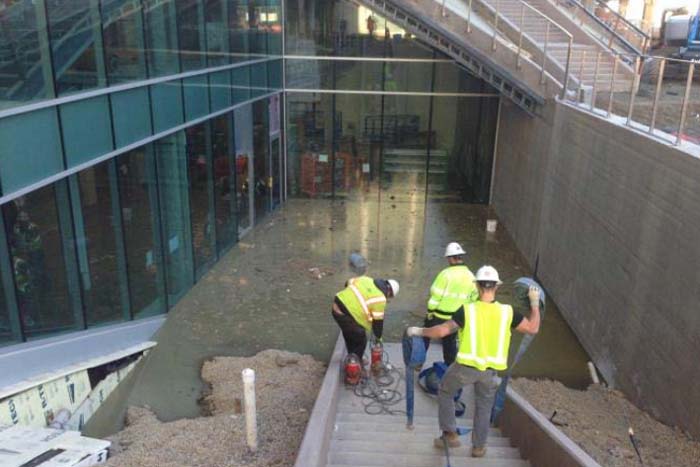
A new building project at a major university in Virginia required replacement of an existing section of 18-inch diameter underground chilled water supply and return piping. As the new chilled water supply piping was being filled at project completion, one of the pipe joints failed. The resultant leak caused extensive erosion, damage to adjacent piping from settling, and flooded a nearby medical facility.
The new chilled water lines had undergone and passed all required pressure testing, passed all required inspections by project engineers and the Authority Having Jurisdiction, and pre- and post-incident photos showed no evidence that the failed joint had been improperly installed.
The replacement piping deviated from the mechanical building plans for various reasons. In anticipation of such deviations, the project specifications required air vents to be installed at all high points in the underground system. Review of the as-built plans revealed two high points in each of the underground supply and return lines; however, no vents were installed at either location.
The EIS engineer determined that when the system valve was initially opened, air became trapped at the high points. As flow increased, the trapped air broke free and traveled downstream, creating a slug flow; a discontinuous flow pattern characterized by pockets of air-liquid mixture followed by surges of nearly pure water. Unlike established pipe flow, where constant fluid density produces no net change in momentum, a slug flow produces unbalanced forces at changes in direction. The slug flow effectively caused a wall of water to slam into the pipe elbow at the subject joint, creating movement in the fitting and causing it to fail.
Project Photos
Need a forensic investigation?
Contact one of our engineers to discuss your case.