Fire Sprinkler Pipe Installation Defect Caused Pipe Freeze
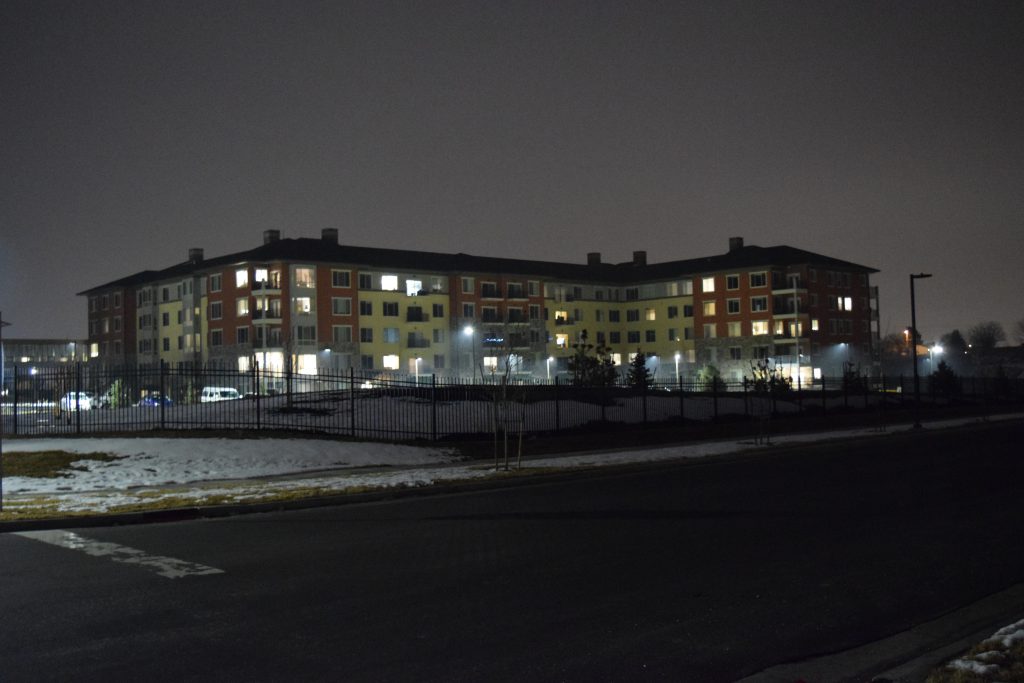
A five-level apartment complex in the Salt Lake City area was in the final stages of construction when a fire-sprinkler pipe fitting located in the attic space froze, ruptured, and caused flooding in the lower floors. EIS was assigned to perform a site inspection and evaluate the piping installation to determine whether any design or installation defects caused or contributed to the loss.
The attic areas of the building were served by a dry fire-sprinkler system. Dry systems are commonly used in unheated spaces where piping may be exposed to sub-freezing temperatures. In these systems, the piping is filled with compressed air which keeps the main sprinkler valve closed. When air pressure drops suddenly, for instance when a sprinkler head activates in a fire, the main valve opens and water flows into the system.
Fire code requires that all fire suppression systems undergo hydrostatic testing; the piping must be filled with water and pressurized to verify integrity. Because of this, pipes in a dry fire suppression system must all slope back toward a drain so that test water can be fully removed before the system is placed into service.
During the site inspection, EIS discovered that the piping in the vicinity of the broken fitting was not properly sloped. Due to the negative slope, water became trapped in the sprinkler pipe after hydrostatic testing. When outdoor temperatures dropped substantially, the trapped water froze, broke the fitting, and caused the main fire-sprinkler valve to open, flooding the floors below.
Project Photos
Need a forensic investigation?
Contact one of our engineers to discuss your case.