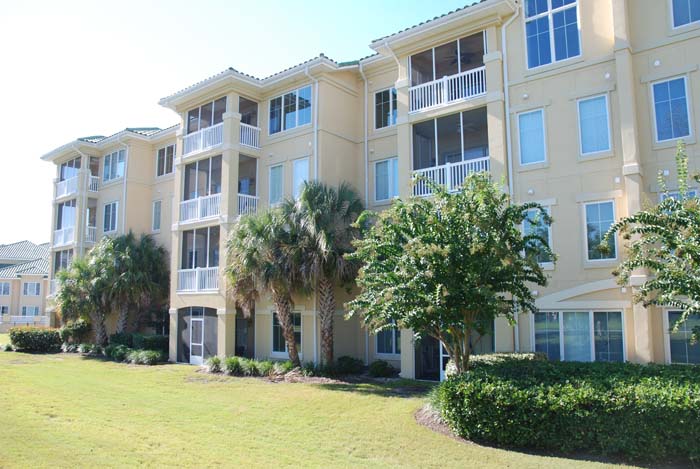
Condominium Complex with Multiple HVAC Construction Defects
A lawsuit was filed concerning a condominium complex in coastal South Carolina wherein a number of construction defects were alleged, including defects related to the HVAC system. The complex consisted of 10 buildings and 260 individual condominium units. The EIS engineer was tasked with investigating a sample number of HVAC systems in each building to assess the validity of the alleged defects.
Insufficient Airflow: The complaint alleged that HVAC systems were unable to supply sufficient airflow to adequately cool all rooms. Airflow to each room was measured using a balometer and compared against the mechanical building plans. Many units fell outside the acceptable +/-10% range; however, further inspection revealed that dirty, long-unchanged air filters were the primary cause. With new filters installed, nearly all units met airflow requirements.
Incorrect Wiring: Several condensing units outside the buildings were found to be wired to the wrong air-handling unit, meaning their operation was controlled by a neighboring unit's thermostat. Continuity and voltage tests confirmed that multiple sample systems were incorrectly wired.
Missing Return Ducting and IMC Violation: Return ducting to the air-handling units had been omitted on all systems. Return air traveled through louvered doors in laundry rooms and mechanical closets, causing those spaces to meet the International Mechanical Code definition of a plenum. The code requires a plenum to be free of all combustibles, placing items such as clothing and cleaning supplies in code violation.
Refrigerant Line Installation and Premature Compressor Failure: The refrigerant lines were not installed per manufacturer recommendations for units on floors 3 and 4. The vertical distance between the condensing units at ground level and the air-handling units exceeded the specified threshold requiring an accessory kit. The kits were omitted, causing or contributing to premature compressor failure across a number of the affected units.
Project Photos
Need a forensic investigation?
Contact one of our engineers to discuss your case.